
Let’s talk Gates – the No. 1 Failure to Comply
Examples of why owners attention to this particular Non Compliance
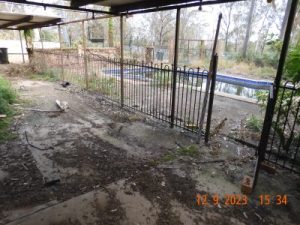
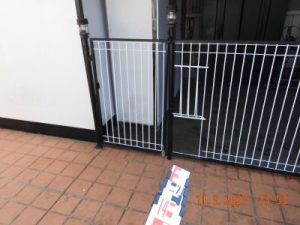
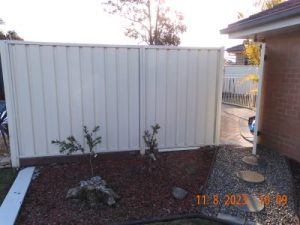
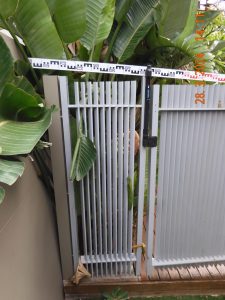
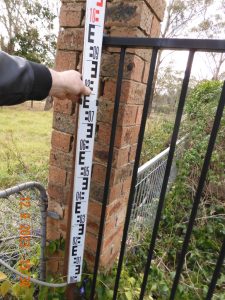
Over the years I’ve seen all sorts of non-compliances relating to the Pool Gate. More attention could be paid to this critical component, as it is the No. 1 failure to comply and the leading reason for child drownings or near drownings in the backyard pool. Whether you have one pool gate or four, all of them are required to comply. Let’s have a look at some of those issues so that maybe you will be more aware of the risks relating to the Pool Gate.
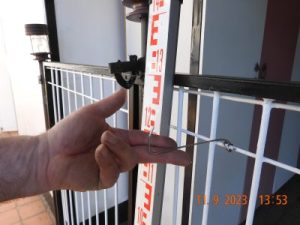
No.1 – and the most dangerous Non Compliance for any Pool – the Propping of the Gate – often a brick or a pot or more concerning is the fitting of a device for the purpose of propping the gate and I’ve seen dozens of devices fitted!
No.2 – the failure to self-close and self-latch from any opening position. Simple to fix yet commonly overlooked.
No.3 – the binding of the gate on long grass, raised ground levels, vegetation and retaining walls. Owners need to test more often.
No.4 – the shielding of the gate release mechanism or the height of the gate release. https://www.poolcertify.com.au/is-your-glass-gate-latch-correctly-shielded/
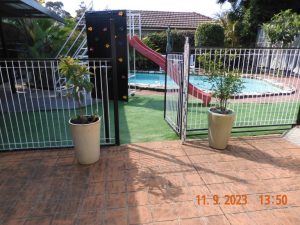
No.5 – the fact that many pools have two, three or even four and in a number of cases, not one of the gates was found to be compliant.
No.6 – the inward opening gate. This is an immediate failure to comply even if it self-closes correctly.
No.7 – the secondary gate, often that leads directly to the street, that by design is incapable of self-closing and self-latching
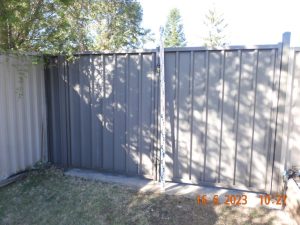
No.8 – the gate within a Boundary Fence – have you installed a gate that leads into the neighbouring property – quite often found to be a public area such as a lane-way or park.
No.9 – the use of a non-compliant material with gaps within the rods that exceed 100mm
No.10 – gaps exceeding 100mm below the gate.
No.11 – do not install a Gate with horizontal components within NCZ5, the 900mm Non Climbable Zone of the boundary fence
No.12 – the gate installed directly across an opening in the Residence
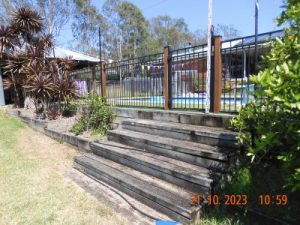
No.13- There is no landing – contrary to BCA requirements – where more than 3 steps lead to a gate, there must be a landing
Making Pools Safer, One Inspection at a Time
Book An Inspection
Book An Inspection
So reach out to our Pool Compliance Inspector at Pool Certify
The information provided in this article is for general informational purposes only and is not intended to replace professional advice. The publisher of this article cannot be held liable for the creation of any new non-compliances. The publisher cannot prevent a failure to comply issued by this or any other inspector when advice has been misinterpreted.