
Clause 2.4.2.3 of the current Standard requires any gate latch release that is located less than 1500mm above finished ground level to be adequately shielded. Shielding of the latch release must be evident within a 450mm radius of the gate latch. This means there can be no gap between the gate and the adjacent panel that exceeds 10mm. To further limit accessibility to the latch release for a glass pool gate it is to be located on the inside of the gate and is required to be located a minimum of 150mm below the top of the gate
There are a number of potential contributing factors to an excessive vertical gap within 450mm of the gate release mechanism.
- The gate and adjacent panel were installed with an excessive vertical gap
- The gate post is not plumb due to ground settlement
- There may not be continuous footings below the gate and pool barrier
- The gate could be installed on a corner where there is no supporting post or bracket
- An excessive gap could contribute to unreliable gate closure
- Deflecting an end panel on a corner can contribute to an excessive vertical gap.
- Pressure applied to the end panel could enlarge the gap so it exceeds 10mm
Making Pools Safer, One Inspection at a Time
Book An InspectionThere are a number of methods that could be used to reduce the gap.
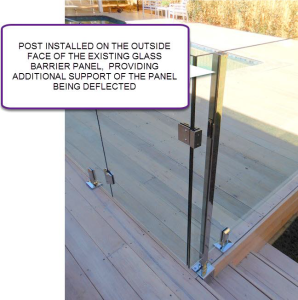
The better course of action is to avoid installing the gate on a corner. Where the gate is away from the corner the issues are reduced. Reduce the excessive gap to less than 10mm by adjusting the intersecting panel. This may require the services of a licensed glazier to reduce the risk of damage during the adjustment. In the last example below, the owner elected to retain the gate in its current position. To comply he installed a post to provide additional support to the panel that could be deflected.
Before you start any rectification works reach out to our Compliance Inspector at Pool Certify
The information provided in this article is for general informational purposes only. While we strive to offer accurate and up-to-date content, it is not intended to replace professional advice. The publisher of this article cannot be held liable for the creation of any new non-compliances, a failure to comply issued by this or any other inspector, that may have resulted after reading and acting on the general information contained herein, or any damages, injuries, or losses that may result from the application of the information provided where the pool owner has not sought appropriate professional on-site advice prior to taking action.